New supply won’t fix housing while investors keep winning
Gavin A. Wood, Rachel Ong ViforJ , Christopher Phelps, Susan J Smith
To fix the housing crisis, further reform is needed that shifts taxation away from earnings onto passive assets.
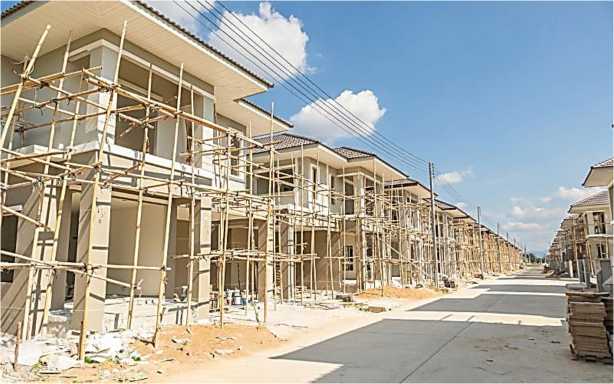
Rates of homeownership have fallen against a backdrop of rising prices. Meanwhile, affordability concerns in private rental housing have grown. Australia’s housing system is in crisis.
Over many years, the calls for more new housing supply to address this problem have grown louder. Despite repeated efforts, supply has lagged behind demand, hence the upward pressure on housing costs in all sectors.
There are numerous factors responsible for this impasse. Supply-side impediments deserve attention. But it is easy to overlook the way developents on the demand side of our housing system equally frustrate repeated efforts to improve supply and lower costs.
One important shift is in the direction of rentier capitalism as the ever-growing quest for investment opportunities through secondary residential ownership is overlaid by incentives to extract and maximise rental income. Secondary dwellings belong to owners whose primary residence is elsewhere. They may be holiday homes but are more typically held to capture financial returns via capital gain and rental income.
The appetite for such investment is sharpened by tax concessions that the Commonwealth Government has finally moved to reform in the recent budget. Other drivers of this investment demand include the growth of retirement savings accounts, rising and unequally distributed household wealth, and lower returns on bonds compared with the capital gains available from residential property.
Strong growth in the largely profit-driven secondary sector can crowd out many of those seeking to buy homes to meet their housing needs in the primary sector. With new builds so constrained, there is direct rivalry between secondary and primary ownership that is clearly being won by the former. We estimate that secondary ownership extended to 3.2 million properties nationwide in 2022, a 43 per cent increase on the 2006 count. The primary sector grew to 6.9 million properties in 2022, a more sluggish growth of only 24 per cent over the same timeframe. In 2022, there were 2.2 primary homes for every one secondary home; back in 2006 it was 2.5.
These figures signal the loss of homeownership opportunities. But structural changes within the secondary ownership sector also set off alarm bells. The sector includes second homes that exclusively serve as a holiday house. Owners are making increasing use of platforms to make what were holiday-only homes intermittently available for short-term tenancies to generate rental yield. There are also properties that owners never intend to occupy that are generally made available as long-term tenancies. This is the source of mainstream privaterental housing.
Growth in these three segments has been uneven. With the emergence of online intermediary platforms such as Airbnb, short-term lets have surged, doubling in number over the years 2006-2022, and lifting their share of all secondary properties from 9 per cent to 13 per cent. By 2022, the 400,178 secondary homes available as short-term lets exceeded the number of social housing properties at 347,652. There are few more important symbols of the changing priorities in Australia’s housing system. Meanwhile investment properties, mostly available for long-term lets, grew by only 37 per cent, and their share of the secondary sector has declined (from 78 per cent to 74 per cent).
These developments don’t just mean homeownership opportunities are sacrificed and with them the wellbeing benefits ownership can deliver. They also weaken housing’s wider contribution to productivity and economic growth by impeding labour mobility and crowding out business access to credit.
The Australian housing system cannot recover without tackling a dated, inefficient and unfair suite of residential property taxes. We call for a bold set of reforms, introducing what we call ‘Feebate’. This sweeps away all transfer taxes on acquisition (stamp duties) and disposal (capital gains tax) of residential property, replacing them with a residential fee that takes the form of a land value tax on property owners together with a housing dividend paid to home occupiers.
A two-tier structure is envisaged for the fee in which a higher fee is applied to land on which secondary properties sit. These changes sit aside from the taxation of landlords’ rental income streams, though we agree with the recent measures limiting negative gearing to new properties.
Applying the fee to all residential land could help finance a social housing investment program. The introduction of fees levied on land values can also be part of a bid to shift taxation away from earnings to passive assets, a goal furthered by diversion of some land tax revenues to fund the taxable housing dividend that would be received by all households residing in primary dwellings.
As with all substantive reform proposals, there are practical and political hurdles to surmount that we address in our paper on Feebates. The housing crisis calls for reform that goes beyond the superficial measures that in recent years have primarily served to fuel further long-term increases in housing costs, while purporting to ease housing affordability in the short run. Feebate is a considered package that opens up a new, more efficient source of government revenue to both replace the revenues foregone from inefficient transfer taxes and fund new initiatives to promote a just and efficient housing system.
Source: Pearls & Irritations, 2 Jul 2026 https://pearlsandirritations.com/post/2026/07/new-supply-wont-fix-housing-while-investors-keep-winning/

Gavin A. Wood is Emeritus Professor of Housing and Urban Research at RMIT University, Melbourne and Adjunct Professor in the School of Accounting, Economics and Finance, Curtin University, Perth.
 Rachel Ong ViforJ is John Curtin Distinguished Professor and ARC Future Fellow at the School of Accounting, Economics and Finance, Curtin University.
 Christopher Phelps is a housing researcher and ARC DECRA Fellow in Economics at Curtin University.
 Susan J. Smith is the is Hon Emerita Professor of Social and Economic Geography, and Life Fellow at Girton College, University of Cambridge, UK.
Editorial commentary: A central thrust of this article is that the housing crisis is not primarily a supply side problem. This perception is correct and it is a valuable contribution to a debate that is only going to intensify if, as seems likely, the current correction in house prices continues to broaden and deepen. The deregulation of the mortgage market (especially the entry of banks into mortgage lending) in the 1980s has been a disaster from the point of view of meeting housing need – and part of the wider failure of neoliberal policy. It would have been helpful to place more emphasis on the role of bank lending and money creation on the demand side. It can be argued that bank deregulation in the 1980s coincided with trending growth in the involvement of private banks in the mortgage market and actual mortgage lending in multiples of household income higher than those seen in the 1960s and 70s, and that this lending (because the process of bank credit issuance creates new money) resulted in higher house prices. The article also has avoided mention of other relevant aspects relating to (a) the valid reasons for imposing stamp duty, (b) high property owner-ship mobility and its impact on neighbourhood connections and social capital, and (c) greater demand associated with a high immigration policy. Some of the article’s proposals are debatable, but debate is not a bad thing. Readers are invited to submit comments.